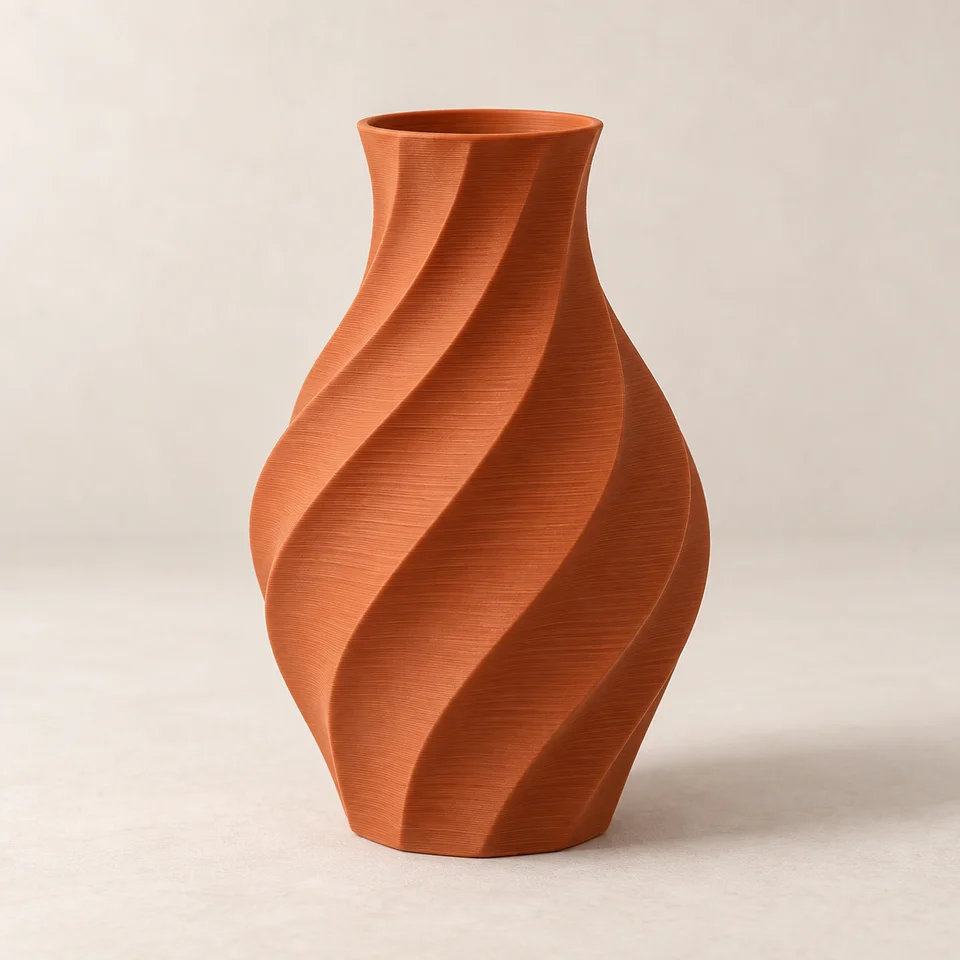
Find the best PLA filament for your next print
PLA, or polylactic acid, is a common starting point for 3D printing. It is known for ease of printing, detailed models and relatively low warping. A beginner making a first prototype and a professional checking a model can both benefit from its straightforward handling. Standard PLA is a sensible choice for visual work when high heat resistance or a tough, flexible part is not required.
Our catalogue is being selected. No PLA products are available to order yet. Use this category to understand your options, then check the individual filament specifications when products are published. We will provide the source behind each compatibility claim so you can make a decision that matches your printing needs.
PLA basic, PLA matte and PLA silk: choose your finish
PLA basic generally describes an everyday formulation. PLA matte emphasizes a low-gloss surface, while PLA silk is chosen for a reflective appearance. These are product descriptions, not universal performance standards. Compare the exact brand's data rather than assuming every filament with the same finish behaves identically.
For PLA filament for smooth decorative models, consider the finish alongside layer height, orientation and your slicer profile. A finish cannot guarantee perfect quality. High-speed printing also needs an appropriate filament profile and an extruder that can sustain the requested flow; the printer's advertised travel speed alone is not enough.
Color variety, wood and metal effects
Color is a design decision as well as a shopping preference. Start with the model: a single color can make its geometry clear, while a contrasting color can distinguish separate components. Ask for a physical sample if color matching matters. Screen settings and lighting can change how a spool or finished object looks.
The wider market offers a range of diverse colors and specialty finishes. Wood-filled and metal-filled PLA add particles to change appearance and texture. Check nozzle requirements carefully: Prusa notes a greater clogging risk with particle-filled composites and calls for a hardened nozzle with metal-filled filament. Do not treat a metallic color as proof that a filament contains metal. Similarly, a wood effect and actual wood content are different claims.
Check your 3D printer before choosing PLA
Confirm the filament diameter, nozzle requirements and build-plate instructions for your exact printer. If you use an automatic material system, check both the filament type and the spool dimensions. A printer supporting PLA does not establish that every spool can feed through every accessory.
For consistent results, record the product name, color, slicer profile and any settings you change. Follow the manufacturer's storage and drying instructions. When moving to a different PLA formulation, begin with the recommended profile and evaluate a small sample before committing to a long job. Consistent documentation makes it easier to repeat a successful result or identify why a later attempt changed.
PLA or PETG for your application?
Consider what happens after printing. PLA material works well for many display models and concept prototypes, but ordinary PLA has limited temperature and outdoor resistance. PETG is another option to investigate when a project needs greater toughness or heat tolerance. The relevant property must still be checked on the exact product's data sheet; material names alone cannot establish strength or suitability.
Avoid choosing solely on a broad claim like eco-friendly. Plant-based feedstock does not mean a finished PLA print belongs in household compost. Prusa explains that decomposition requires specialized conditions. A useful environmental decision also considers waste, the lifetime of the object and locally accepted disposal routes.
Explore PLA with a clear next step
Write down your printer, intended application, preferred finish and color, then compare those requirements with the published product details. We will only offer purchasing once prices, fulfilment and support information are confirmed. Until then, find your starting point in the filament finder or get launch updates. Illustrations on this page show possible forms, not tested samples or products for sale.