Choose PETG 3D printer filament for your project
PETG is a glycol-modified form of polyethylene terephthalate. This thermoplastic is often considered for functional parts because it combines relatively straightforward printing with toughness and strong layer adhesion. A bracket, organizer or prototype may need a different balance of properties from a display model. Start by describing the job the finished part must do.
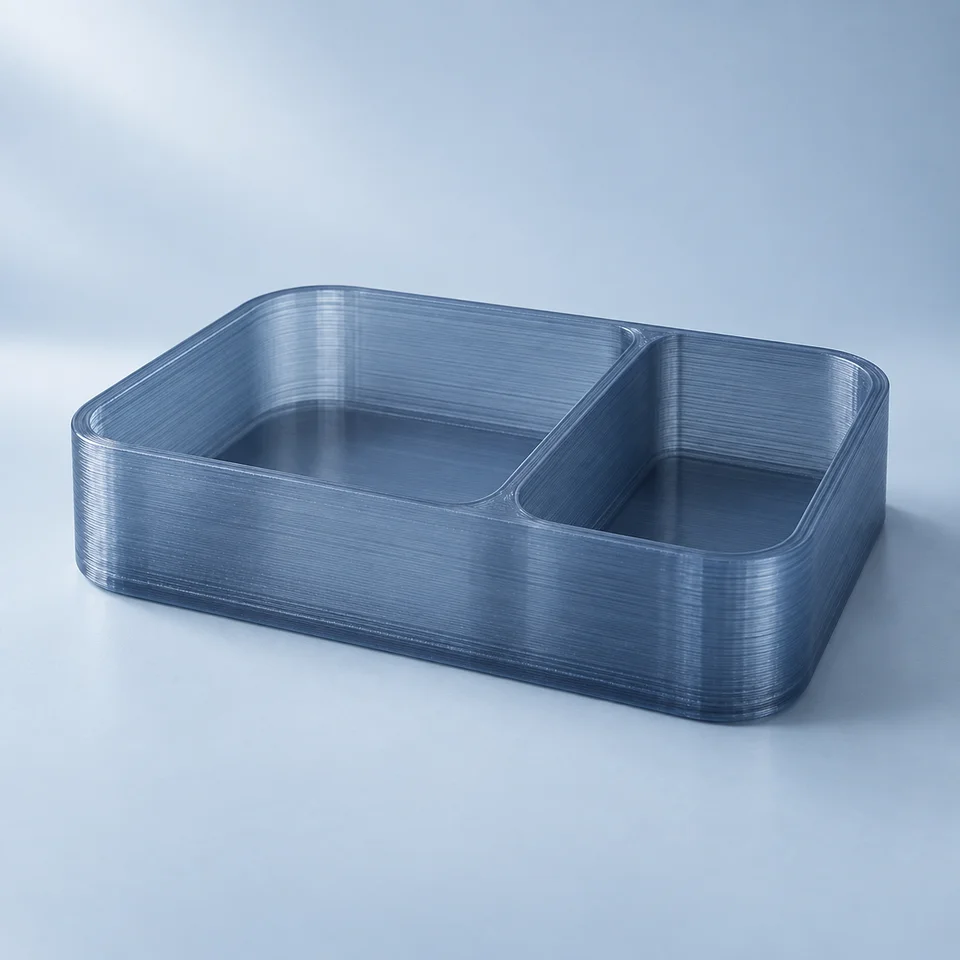
Our PETG filament catalogue is in preparation. There are no products available to order yet. This category explains what to compare before choosing a spool. Product-level performance, compatibility and availability will be listed only when the details have been verified. The illustration is a concept study, not a tested sample.
PETG or PLA: strength, finish and ease of printing
PLA is a useful baseline for detailed visual models. PETG generally offers a different balance of toughness and temperature resistance, but choosing the material alone does not make objects more durable. Wall thickness, layer orientation, infill and the direction of the load all affect the finished print. Check the exact filament data sheet when strength or impact-resistant performance matters.
PETG often has a glossy surface. Transparent or translucent color options can produce an interesting appearance, although a layered 3D print is not automatically optically clear. Compare finish samples under the lighting where the object will be used. If a crisp decorative surface is the main goal, PLA may still be the better starting point.
For a part that faces heat, weather, chemicals or repeated stress, define the expected conditions before buying. A generic durability claim cannot replace application-specific evidence. Record what property you need, how you will assess it and what would count as an acceptable result.
Check your 3D printer, 1.75mm diameter and 1kg spool
A 1.75mm label describes filament diameter; a 1kg label normally describes the stated amount of filament. Neither confirms that the physical spool will fit your holder or automatic feeder. Look for spool width, outer diameter, hub opening and the maker's loading instructions. Refill rolls need the correct reusable spool.
Your 3D printer must support the product's recommended nozzle and heated bed settings. Choose a profile for that particular printer, filament and build surface. Avoid copying a temperature from a different manufacturer's product and treating it as a universal PETG setting. High-speed formulations also need suitable flow calibration and machine capability.
Check bed preparation before the first layer. Prusa warns that PETG can bond too strongly to some smooth PEI surfaces. Follow the plate manufacturer's release-layer and removal guidance rather than assuming that stronger adhesion is always better. Let the print cool and use the recommended removal method.
Manage moisture for consistent PETG filament results
Keep the spool according to its maker's storage instructions and use the specified drying procedure when required. Moisture is one possible contributor to poor surface quality, but stringing can also involve temperature, travel and retraction. Diagnose one variable at a time rather than changing every setting together.
Keep a short record of the product, batch if available, color, profile and any adjustments. A small representative print can reveal problems before a long build. For a replacement part, include the relevant feature in your trial: a hole, clip, mating surface or thin wall is often more informative than an unrelated decorative model.
Compare 3D printer filament with a clear checklist
Choose the material family, confirm your printer and accessories, then compare the individual product's specifications. Consider net quantity, shipping and support together when prices become available. A lower spool price does not necessarily produce a lower cost per successful part.
Use the material library for a closer look at PETG and PLA, or start with the filament finder to organize your requirements. We will add purchasing when the catalogue and fulfilment information are ready. Until then, use these notes to prepare a focused shortlist rather than treating an empty catalogue as a recommendation.